I worked as the technical/game designer, programmer, and a UI/UX developer for Tourist Trapper, a comedy/horror tycoon simulation game created in Unreal Engine 5.
My Role in Tourist Trapper
I worked as the technical designer and programmer for Tourist Trapper, a comedy/horror tycoon simulation game created in Unreal Engine 5. The most complex system to build and expand upon for the game was the tile system for placing both the attractions that the player used to trap or attract customers, along with placing walls for flow control of the exhibits.
Design wise, the most complex parts of the tile system were:
– Laying out the tiles in the game,
– Adding or removing tiles,
– and balancing the effects of the placeable tile items.
Development
In the beginning, the tile system was one of the first systems to be programmed into the game due to how integral it was for the rest of the game. It started as simple scalable grid of tiles built from rows and columns, with every tile having a “coordinate” set for their placement on the grid.
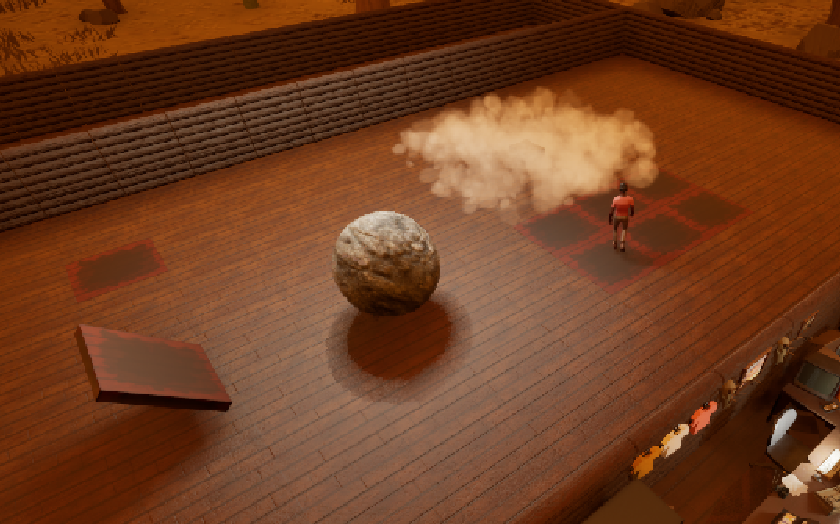
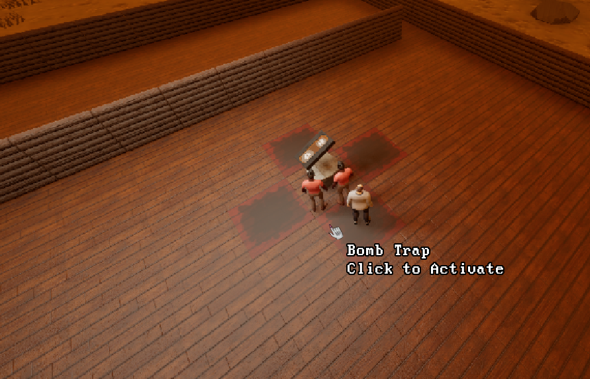
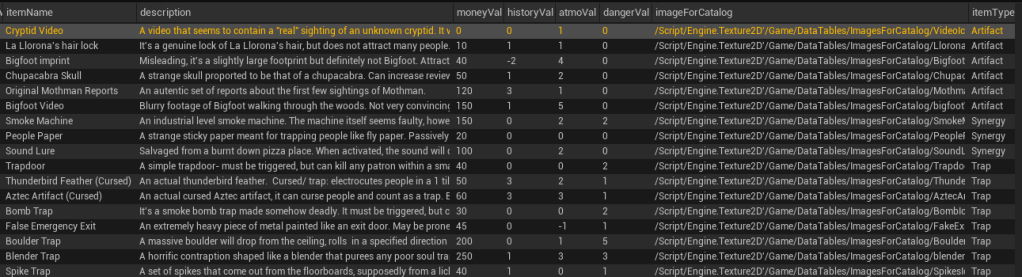
Once the grid was in, placeable artifacts were available, along with traps used to feed the player’s boss, La Lechuza. The artifacts started simple, with trapdoors or bombs being dropped to take out multiple customers, to massive boulders that could bounce about the area based on physics and wall placement.
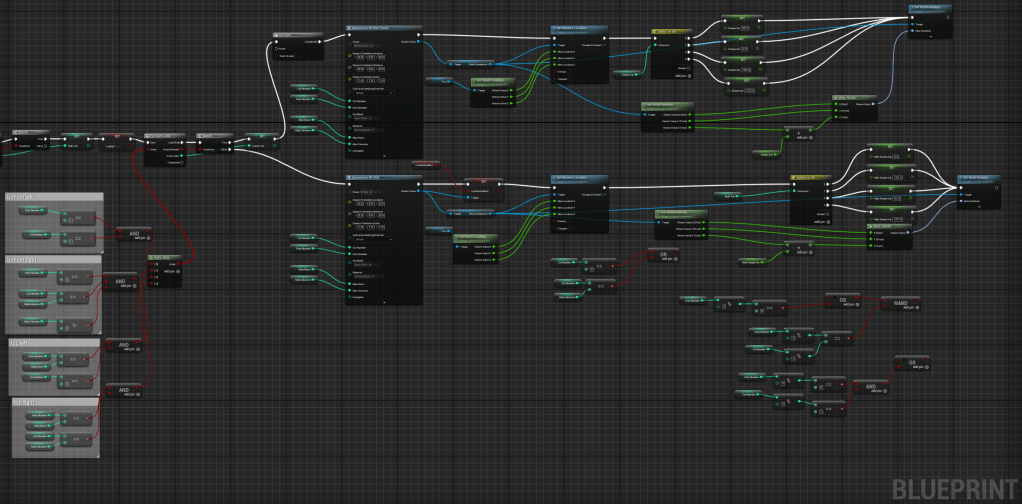
The walls were also implemented around this time, allowing for a wall, a corner, a three way, and four way to allow for many different types of layouts for player expression.
Once the core mechanics were implemented, much of the development of the tile system afterwards was focused on honing what was there already and trying new and creative ways for the player to take out customers, as it was one of the main focuses of the gameplay loop.
TECHNICAL EXPLANATIONS
Underlying Tile System Design
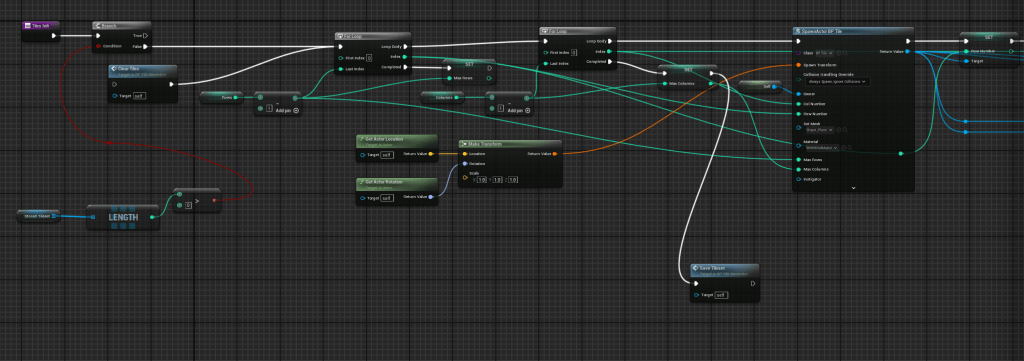
The tiles are individual actors that are generated for the level so that they can be changed on the fly for the different items or for different effects. These use a TileGenerator class that takes in a length and width from the user, then creates an array with all of the tile location coordinates for the tiles to use and transform to when they are then generated into the level. Once they are generated, they are saved in case there is any operation that affects the entire board, while still allowing for each tile to be able to be changed independently from one another.
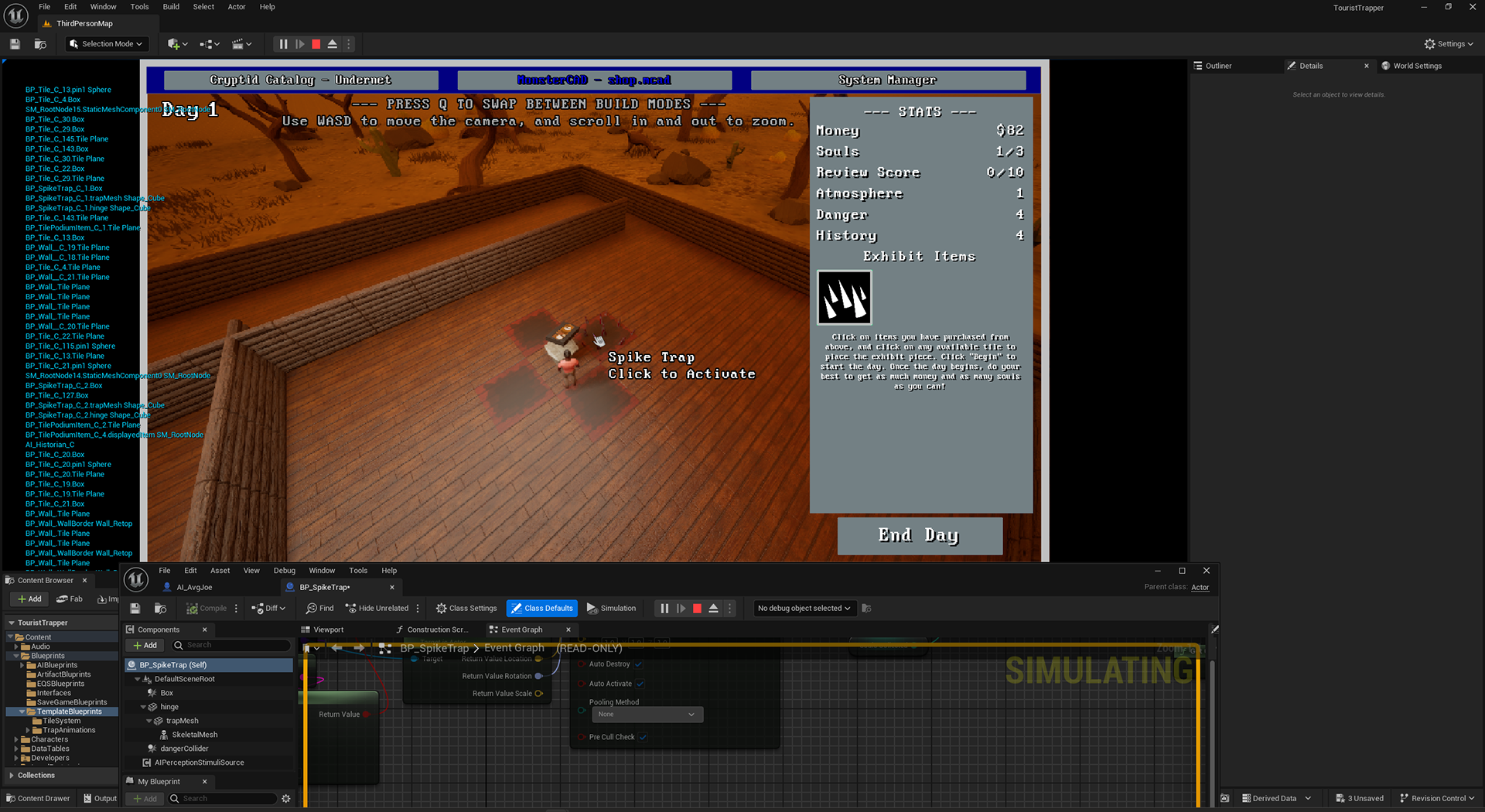
A showcase of the tile set in action with walls, traps, and artifacts in the game level.
Placeable Tile Types and Implementation
Most of the challenge and learning came from how there were many exceptions to account for, such as traps that could also be considered attractions like the Aztec Artifact, or having physics objects that could interact with other parts of the grid, such as the boulder trap and it interacting with not just the customers, but also with the walls and other items.
Artifacts/Attractions
The standard artifacts were the most simple to implement, but there was trouble with dealing with how the system handled removing and re-placing objects, since it would frequently just add the piece back to the inventory but keep the “original”, effectively functioning as a duplication glitch. However, using the tile actors that were already on the board, I was able to remove the items that were already placed from the inventory so that the artifacts would only be able to be placed once, while still allowing traps to be placed multiple times.
Traps
Traps were more complicated due to the fact that they could have many different types to them- the artifacts were functionally similar, but part of the fun (and programming challenge) was finding creative ways for the player to take out customers for La Lechuza. As such, each of the traps required much more flexibility in how they were programmed, while still being standardized to where they were still manageable.
Synergy Items
Synergy items were placeable tiles that were helpful to the player but did not explicitly fall into the category of a trap or an artifact, such as the slowing People Paper or the Smoke Machine. Again, these required more variability in how they were able to act, but their underlying logic was similar to that of the artifacts and traps. They still give bonuses or decreases to specific stats when placed, but their effect is more passive than the average trap, so playtesting was crucial in determining if each of the synergy items fit within the game and still were useful to the player.
 CHRIS BRUNS